



Why Choose Tin Boxes for Chocolate Packaging Over Other Materials?
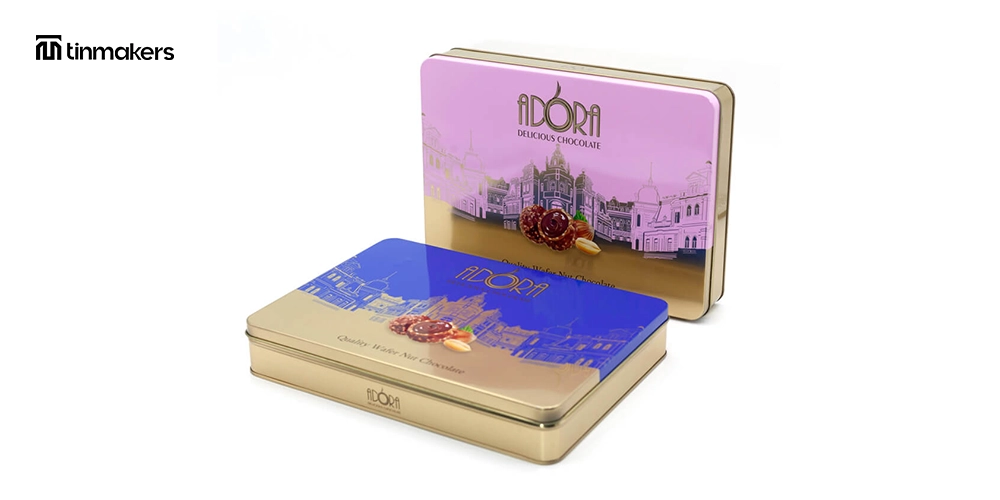
Tin boxes seal in flavor, block light and moisture, and look like a gift all by themselves. Because metal is sturdy and endlessly recyclable, it keeps chocolate safe during travel and kind to the planet at the same time.
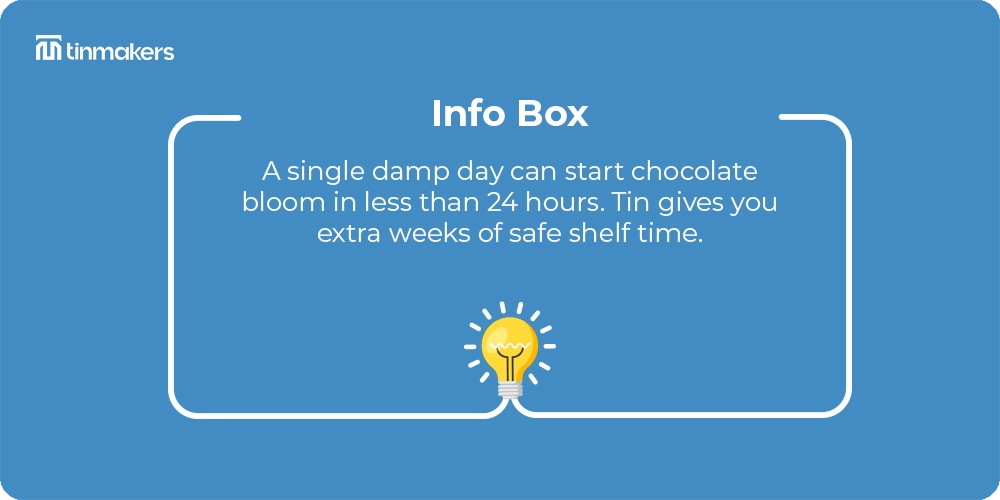
Imagine you are a child opening a candy bar and discovering an uneven white layer on top. This "bloom" is due to moisture in the air meeting sugar or fat and ruining the shine. Furthermore, it means a disappointed customer and lost repeat business.
Good packaging prevents moments like this.
Tin boxes for chocolate packaging give them a hard shell that stands up to heat bumps, warehouse humidity, and busy store shelves. The lid clicks shut, the metal walls stay cool to the touch, and your logo prints in bright colors that will not rub off.
Best of all, shoppers often keep the box for small treasures long after the last bite. That turns a one-time snack into a daily brand reminder sitting on a desk or kitchen shelf. This article shows how tin does the job better than paper, plastic, or even glass and how each benefit speaks to real problems you face in production, shipping, and sales.
Why does strong packaging matter for chocolate?
Chocolate is a delicate substance which is prone to melting at body heat. It absorbs nearby smells and chips under the slight pressure.
When air sneaks in, cocoa butter reacts with oxygen and turns stale. When damp warehouse air seeps through, sugar pulls in water and forms those chalky streaks customers hate. Even a small dent in transit can snap a filled shell and leak caramel.
That’s why the first defense line is the box, not the recipe. A rigid, tight-sealing pack keeps outside air and moisture away, shields against crushing weight, and helps control temperature swings.
Chocolate tin boxes also carry your story, shape, color, and finish speak before the shopper even reads the label. If the pack feels special, the chocolate inside instantly feels worth a higher price. Tin ticks every one of these needs at once.
Reasons to choose tin boxes for chocolate over other materials
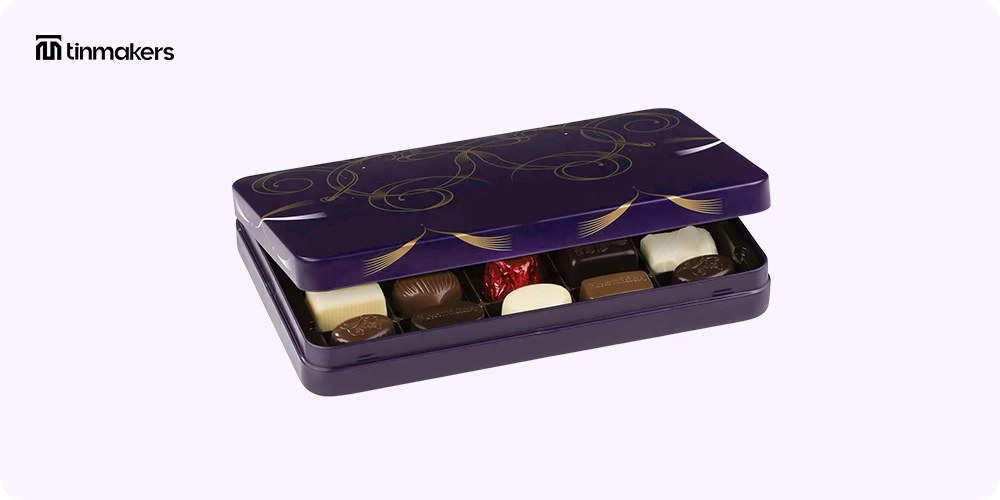
It is important to note that the shape of the packaging plays an essential role in the impression of the chocolate brand. Against the backdrop of cardboard and plastic packaging, you can package your chocolates in a way that is both safe and catches the eye.
There is nothing like tin containers to show off your chocolates, and they are very classy and expensive. The low toxicity and corrosion resistance of these materials make them an excellent choice for premium chocolate packaging.
Here are some reasons to choose metal tins for your brand.
1) Keeps flavor and freshness locked in
Chocolate hates water vapor. Paper lets it pass; many plastics slow it only a little.
On the other side, tinplate walls are nearly airtight, so humidity stays outside, and bloom never forms. Lab trials found the water-vapor flow through tin is many times lower than through PET sleeves.
The smooth, food-safe inner lacquer, like epoxy phenolic, acrylic, phenolic, and vinyl resin, also stops smells, so mint bars taste like mint, not warehouse pallets. For small makers shipping in warm months, that extra barrier can mean the difference between safe stock and a costly recall.
2) Protects against breakage and mess
Cross-country freight is rough. It includes:
Forklifts jiggle pallets
Vans hit potholes
Store clerks stack boxes high
Thin chocolate bars crack, and caramels cave in. Tinplate is mild steel with a yield strength of around 200 MPa, enough to shrug off everyday bumps.
Rigid walls of chocolate tins cut waste at every stage.
It means:
Fewer crushed pieces on the pack line
Lower returns from stores
Happier gift buyers who count on clean shapes
That strength lets you stack the metal tins higher, so you ship more bars per pallet and lower freight cost per piece.
3) Friendly to the planet and brand image
Shoppers now read the recycling logo as closely as the sugar line. Steel chocolate packaging leads the way, with roughly 80% of tin boxes in Europe sent back into real furnaces. That loop can repeat for life; steel does not lose strength when remelted.
Infinitely recyclable, truly circular
Steel maintains strength when recycled
Reduces landfill waste significantly
Supports a circular economy
Sustainable packaging, lower carbon footprint
Using an eco-friendly chocolate tin lets you print simple, clear claims (“metal recycles forever”), avoiding vague green buzzwords that buyers no longer trust. In this way, it is an environmentally responsible choice that aligns with consumer demands for environmentally conscious products.
4) Adds a premium look and feel
People buy chocolate with their eyes first. In eye-tracking tests, shoppers stared at metal tins longer than at pouches or cartons. That “pause” gives your chocolate brand the moment it needs to win the basket.
Metal also feels cool and smooth, signalling care and value.
Embossed lids bring logos to life.
Special shapes (hearts, stars, even tiny suitcases) turn into gifts without extra wrapping.
Collectable art prints encourage repeat buys for every new design.
Tinplate’s lusters, durability, and intricate customization (embossing, varnishes, or unusual shapes) make this a sophisticated and desirable chocolate packaging solution.
5) Perfect for seasonal gifts and limited runs
Valentine assortments, Christmas cookies, wedding favors, these packs often sit in warm living rooms before they are eaten. Metal slows heat flow, so chocolate keeps its snap longer than in thin cardboard.
The rigid 0.23 mm tinplate body also lets you add velvet inserts or see-through windows without sagging. One clear fact: gift buyers rate “keepsake value” higher for tins than any other pack type in focus groups.
That leftover box becomes a pencil cup or sewing kit, keeping your logo in daily sight long after the season. Consequently, tin boxes are a sustainable and eco-friendly way to package chocolate. This "premium" perk ensures your brand remains visible, making a lasting impression.
6) Food-safe coatings and simple printing
Modern tin boxes get a clear, food-grade inner coating that meets strict FDA rule 21 CFR 175.300. It stops any metal taste and keeps oil from staining the walls.
On the outside, high-speed presses print art directly onto metal, so no extra labels are needed. Colors stay bright even on ice or in humid shops.
Here are some printing techniques used for these boxes.
Printing Technique | Advantages |
Offset Lithography | - High-quality, sharp images |
Screen Printing | - Durable, thick ink application |
Digital Printing | - Fast for small batches |
UV Printing | - Instant ink curing |
Small brands can start with short runs. Because of this, tin packaging makes an excellent choice for businesses that offer limited-edition items.
Case Studies of Chocolate Brands Using Tin Packaging
A number of brands use tin packaging for their delicious chocolates. The following are a few case studies of chocolate brands that utilize tin packaging.
1 - Karl Fazer
Karl Fazer, a renowned Finnish chocolate brand, has leveraged tin packaging to celebrate significant milestones and enhance brand appeal.
Tin Packaging Strategy:
In 2012, launched tin box packaging to commemorate the brand’s 90th anniversary.
In 2017, collaborated with a local studio to create a new tin box solution for its centennial celebration.
Benefits:
Enhanced brand visibility through unique, culturally resonant designs.
Tin packaging added a premium and collectible element, appealing to consumers seeking high-quality, nostalgic products.
Source (Behance)
2 - Hershey’s
Hershey’s, a leading global chocolate brand, has used tin packaging to evoke nostalgia and improve its product image, particularly for its iconic Hershey’s Kisses.
Tin Packaging Strategy:
Introduced a vintage-style tin box, inspired by early 1900s candy wrappers, shortly after the company’s first factory launch.
The brown square tin box consists of a container and lid, designed to reflect historical branding and enhance the gifting experience.
Benefits:
Tin packaging added a luxurious and nostalgic touch, making it ideal for gift-giving.
The durable tin ensured product protection while increasing perceived value and brand recall.
(Source: Hershey’s)
3 - Lindt
Lindt is a premium Swiss chocolatier. It partners with chocolate tin box manufacturers to create custom tin packaging for its chocolates, emphasizing quality and aesthetics.
Tin Packaging Strategy:
Uses custom printed heart shaped gift packaging tin with features like metallic lacquer, embossing, and debossing to create a premium look.
Designs focus on protecting chocolates from temperature and humidity, critical for maintaining Lindt’s high-quality standards.
Benefits:
Tin packaging enhances shelf appeal and aligns with Lindt’s luxury brand image.
Provides excellent barrier properties, ensuring chocolate freshness in various storage conditions.
(Source: Lindt)
Final Thoughts
Chocolate is joy in a bite, but only when it arrives fresh, shiny, and whole. Chocolate tin boxes guard that joy better than paper, plastic, or glass. They shut out damp air, shrug off knocks, look like a gift, and slip right back into the recycling loop when empty.
Each benefit tackles a real headache, returns, short shelf life, weak shelf impact, and green claims that can backfire. For makers, big or small, choosing tin is less about luxury and more about smart risk control that happens to feel deluxe.
Tin Makers offers a premium chocolate tin boxes packaging solution to chocolate brand owners and confectioneries. The boxes feature a sturdy 0.25 mm tinplate construction, food-safe silver finishes, and CMYK printing with Pantone accents.
Next time you weigh chocolate packaging options, remember: metal does the hard work while telling a soft, friendly story that your buyer understands the second they hold the box.
FAQs
Does a tin box raise my ingredient cost?
The metal pack costs more than a paper wrap, but lower breakage and a higher shelf price often balance the budget. Many brands see that tin pays for itself within a single holiday run.
Can children open and close the lid easily?
Yes. Most chocolate tins use a slip lid or light hinge. Both styles pop open with a gentle pull, so no tools or sharp edges get in the way.
Will metal make the chocolate taste metallic?
No. A food-grade lacquer coats the inner wall. It blocks direct contact, so the bar keeps its natural flavor from the first bite to the last piece.
How do I print small batch art on the tin?
Renowned chocolate tin box manufacturers like Tin Makers now offer digital presses for metal sheets. You can order as few as a few thousand units with detailed graphics and still meet food-safe rules.

Liam George Freeman
Liam George Freeman is a seasoned expert in the packaging industry, with a focus on delivering sharp, in-depth contributions that resonate with readers. His deep understanding of tin packaging and its expansion, the diverse types, and global impact, including its role in NASDAQ markets, makes him a true gem of a writer. Liam brings clarity and authenticity to every piece. When he’s not crafting compelling insights for the writer's desk, he will likely be found strategizing over a chessboard, always up for a thoughtful match.





Copyright © 2026 tinmakers. All rights reserved