



How Tall Is a Tin Container? A Brief Guide
.webp?alt=media&token=c282fcc6-29f6-4972-a4de-499a27e5c4a1 "Dimensions of tin containers")
Tin containers have no fixed height; they differ in height according to their size and shape. Generally, a smaller can measures 3 to 4.5 inches in height, a medium can measures 4.5 to 5.5 inches and a large can measures 7 to 10 inches in height.
The question “How tall is a tin container?” seems simple. However, its answer is not as simple as you might think.
Tin containers have become the ideal packaging solutions for a range of industries. It depends on their purpose, material, and design and how big they are, particularly when it comes to height.
Whether you’re a small business owner, product manufacturer, or a brand manager, choosing the right tin height sometimes becomes a little headache. For example, if you choose too small, then your product won’t fit. If you choose too large, there will be a waste of your money.
We have written this article that describes typical dimensions and factors that affect tin containers' height and size. We will also share some secrets of custom tin dimensions so you can pack your products accurately with ease of mind.
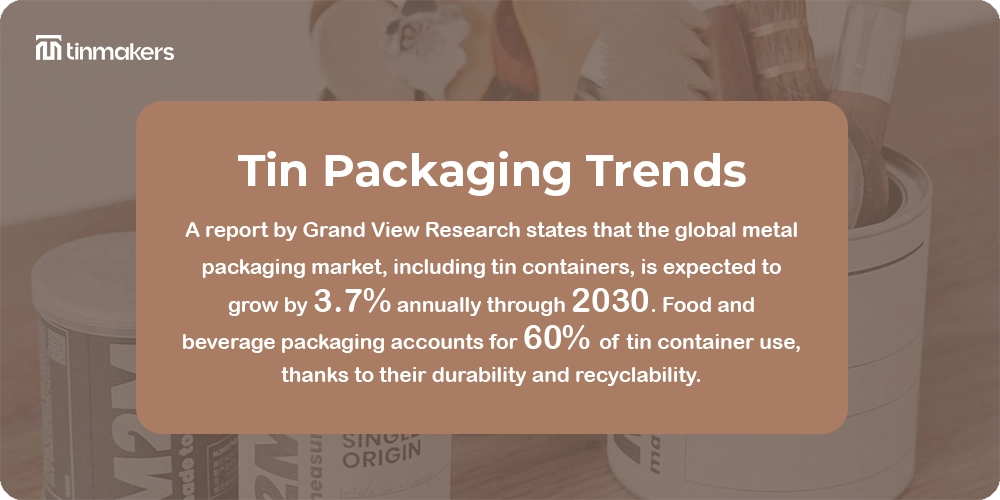
Source: Grand View Research
What Are Typical Heights of Tin Containers?
Tin containers' height determines how products fit, are stored and transported, as well as how they appear overall. It depends upon the container's intended use to determine the height, which ranges from shallow tins for small items to tall containers for bulk goods.
The height of a product directly affects stackability and shelf space. This makes it an important consideration for businesses. It is often measured in millimeters or inches, and manufacturers usually provide both an internal and external height.
The usable space determines the internal height of your product, while the external height includes both the lid and the base, which can impact shipping and display. Selecting the right tin requires understanding these distinctions.
Below are typical height ranges for common tin types based on industry standards and supplier data:
Small Tins (5 ml to 50 ml)
The average height of small tin containers is 0.5 to 1.5 inches. A company's overall packaging strategy can be made or broken based on this knowledge. Tins such as these are reasonable for packaging lip balms, salves, spices, or small cosmetics.
Here are more details about these tins.
Category | Details |
Height Range | 0.5 to 1.5 inches (13 to 38 mm) |
Uses | Lip balms, salves, spices, or small cosmetics. |
Examples | Round tins are 1 or 2 inches in diameter, 0.5 or 1 inch tall, or rectangular slide-top tins are 1.5 inches tall). |
Medium Tins (50 ml to 500 ml)
The average height of medium tins is around 1.5 to 3 inches. In most instances, these tins are used for items that take up a bit more space. However, they still need to be portable and easy to handle.
The following is more information about these tins.
Height Range | 1.5 to 3 inches (38 - 76 mm) |
Uses | Candles, biscuits, tea, or small gift sets. |
Examples | Boxes with square lids (3 to 4 inches wide, 1.5 to 2 inches tall) or hinged rectangular lids (2 to 3 inches tall). |
Making informed packaging decisions requires businesses to understand medium tin heights. It might be more suitable to store bulky items in tall tins, whereas compact tins are better for compact spaces. Furthermore, the height impacts stacking capacity and shelf visibility, both of which are vital for retail display and logistics.
Large Tins (1 to 5 liters)
The average height of large tin containers is 3 to 12 inches. Knowing this is essential to determine the capacity and optimize the packaging efficiency.
Height Range | 3 to 12 inches (76 - 305 mm) |
Uses | Bulk items like popcorn, cookies, or promotional gift baskets. |
Examples | Use large round popcorn tins (10 inches tall) or rectangular storage tins (6-12 inches tall). |
These standard heights are designed to meet common industry needs, but variations exist based on shape (round, square, rectangular) and lid type (slip-on, hinged, or screw-top).
Custom Tin Heights: Perfectly Made As Per Your Needs
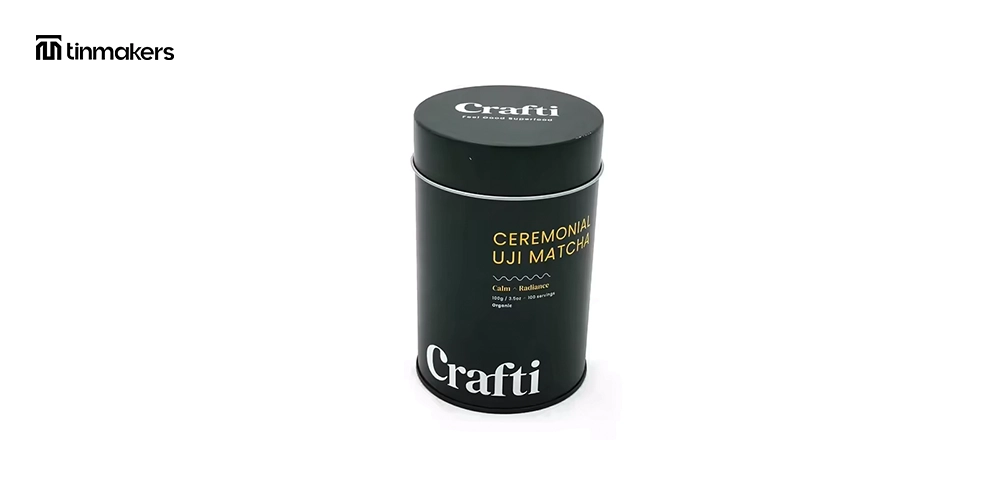
Various businesses require custom tin packaging for their products. For those, custom tin heights offer flexibility to match their product requirements. These tins can be designed to any height, limited only by manufacturing constraints and cost considerations.
Key aspects of custom tin heights include:
Customization Process: Manufacturers like Tin Makers allow businesses to specify exact heights. It usually starts from 10 mm for ultra-shallow tins to over 300 mm for tall containers.
Shape Variations: Round tins may have shorter heights for wide products, while rectangular tins can be taller for slim items like pens or cosmetics.
MOQs: If you’re going towards custom heights, then keep in mind that MOQs will start from 3000 units, depending on the supplier.
Design Considerations: Taller tins may require reinforced bases or thicker tinplate to maintain structural integrity.
Custom heights are ideal for branding, as unique dimensions can make your product stand out on shelves or in e-commerce listings.
How to Choose the Right Tin Height For Your Products?
Selecting the appropriate tin height involves balancing practical and aesthetic considerations. Follow these steps:
Step 1: Measure Your Product
First, know the internal height needed to fit your product securely, accounting for padding or inserts.
Example: A 4 oz candle requires a tin approximately 1.5 to 2 inches tall.
Step 2: Consider External Dimensions
External height impacts shelf space and shipping. Ensure the tin fits standard retail displays or shipping boxes.
Step 3: Evaluate Stackability
For bulk storage or retail displays, choose heights that allow stable stacking without toppling.
Step 4: Assess Aesthetic Goals
Taller, slender tins convey grace for expensive products, while shorter, wider tins suit everyday items.
Step 5: Compare Costs
Custom heights may increase production costs due to specialized tooling. Request quotes from multiple suppliers.
Step 6: Test Samples
Order prototypes to verify height suitability before committing to large orders.
It is important to consider your product's size and display or storage methods, as well as your budget when choosing tin heights. To choose a tin that's both functional and beautiful, follow these steps: measure your product, consider its external size, compare costs, and test samples.
Final Thoughts
There is a wide range of heights and overall dimensions of tin containers available. It all relies on their use, material, and design. Whatever your packaging needs, whether you're a small business owner searching for food packaging, a gift retailer seeking decorative tins, or an industrial supplier seeking storage solutions, knowing the standard heights is important for an influential packaging solution.
Your business's needs, the purpose of the container, and the design elements can help you determine the perfect size for tin containers. The versatility and function of tin containers make them a reliable option for many applications. If you’re looking for affordable and high-quality tin containers for your brand, Tin Makers is your top destination.
FAQs
What’s the most common tin container height?
In general, there isn't a single "most common" tin container height since it greatly varies by industry. Generally, food can heights range between 4 and 5.5 inches. Cosmetic tin’s height ranges from 1.5 to 3 inches. Therefore, it is determined by their usage.
Can I get a tin container in any size?
Yes, with custom tins, you can choose any size or shape. But they’re more expensive and often require a minimum order. Compared with custom sizes, standard sizes are more reasonable and more widely available. With the right size, you can improve customer satisfaction, shipping efficiency, and usability.
Are larger tins better for branding?
Larger tins offer more space for logos, designs, or embossing, which can boost brand visibility. However, they’re costlier to produce and ship. A tin that's too big may not be cost-effective or convenient for customers to handle and store.
How do I measure a tin with a hinged lid?
You can measure the height of the tin with a hinged lid by placing it on a flat surface. Then, use a ruler or measuring tape to measure from the base to the top of the lid. In most cases, hinged lids do not add much height, but they still need to be checked for proper fit.

Liam George Freeman
Liam George Freeman is a seasoned expert in the packaging industry, with a focus on delivering sharp, in-depth contributions that resonate with readers. His deep understanding of tin packaging and its expansion, the diverse types, and global impact, including its role in NASDAQ markets, makes him a true gem of a writer. Liam brings clarity and authenticity to every piece. When he’s not crafting compelling insights for the writer's desk, he will likely be found strategizing over a chessboard, always up for a thoughtful match.





Copyright © 2026 tinmakers. All rights reserved