



8 Things You Should Know About Metal Tin Packaging
Think about the last time a customer opened your product.
Did the cookies arrive soggy, the paint lid dented, or the candle scent already fading?
These are real headaches for brands that ship far, store long, or sell in hot, humid places. Glass breaks, many plastics let air creep in, and paper degrades in the rain.
Here comes a great solution.
Tinplate (steel brushed with an almost invisible coat of tin) solves all three problems at once.
It has guarded peaches since 1810, yet 2025 brings fresh twists:
Direct UV‐print that removes labels
NFC chips that tell shoppers if a pack is genuine
Ultra-thin, high-strength grades that cut carbon without losing toughness
We have written this guide that sets out 8 facts every product developer, buyer, or e-commerce founder needs to know before picking a package. Each fact has been discussed in detail, so you can dip in quickly or read end-to-end on a coffee break.
For your convenience, we will keep the language friendly. It means no long chemistry lectures, yet add just enough technical detail so you can speak confidently with suppliers.
The global metal packaging market was valued at USD 146.70 billion in 2023 and is projected to reach USD 194.68 billion by 2032, with a CAGR of 3.26% (Source: Fortune Business Insights).
1) Tinplate is steel on the inside, tin on the outside
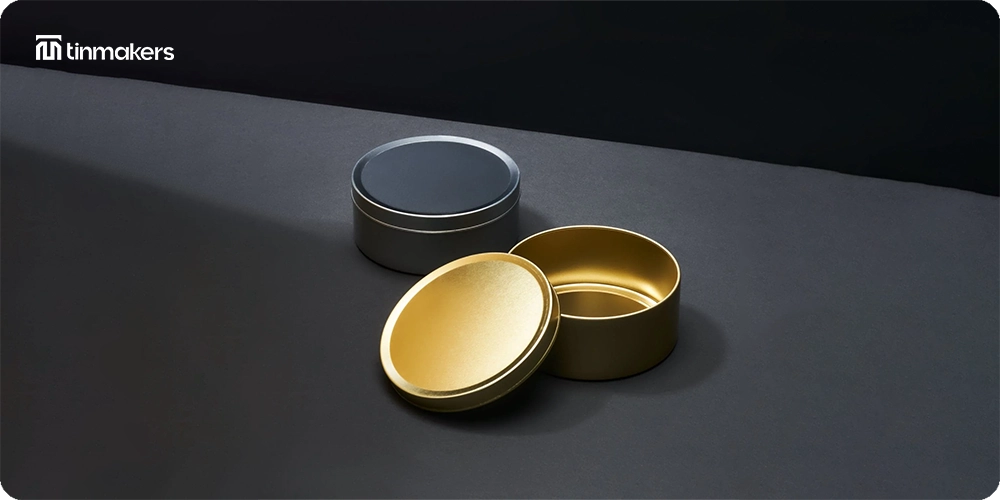
Tinplate begins its life as low-carbon steel rolled to about 0.23 mm. The strip then enters an electro-plating bath where electricity pulls tin ions onto both faces, forming a coat only 0.25-to-2 µm thick.
It is much finer than a fingerprint ridge.
The union makes sense:
Steel grants muscle for stacking and transport
Tin seals out oxygen and lets soldering
Welding and printing happen cleanly
Grades run from T-1 (soft, easy to draw into tall cans) to T-5 (hard, ideal for flat caps).
Tinplate Temper | Thickness (mm) | Example Application |
T1 | 0.18 - 0.20 | Aerosol cans, lightweight food containers |
T2 | 0.21 - 0.23 | Beverage cans, small tin boxes |
T3 | 0.24 - 0.26 | Food cans, general-purpose tins |
T4 | 0.27 - 0.29 | Large food containers, chemical cans |
T5 | 0.30 - 0.32 | Heavy-duty industrial containers, paint cans |
If you plan a deep-drawn sardine can, ask for T-2; if you need lids that click onto paint pails without buckling, order T-4 or T-5.
Coating weights follow ASTM A624 codes such as 50/25 or 75/50, meaning 5.6 g/m² of tin on one side and 2.8 g/m² on the other. Higher weights resist acidic foods yet cost more, so matching the grade to your product avoids waste.
Finally, nearly all metal food tins carry a clear epoxy or polyester lacquer inside. This invisible layer stops juice and tomato acids from pitting the metal, and it is registered with the FDA Threshold of Regulation list. Hence, compliance paperwork stays simple when you export.
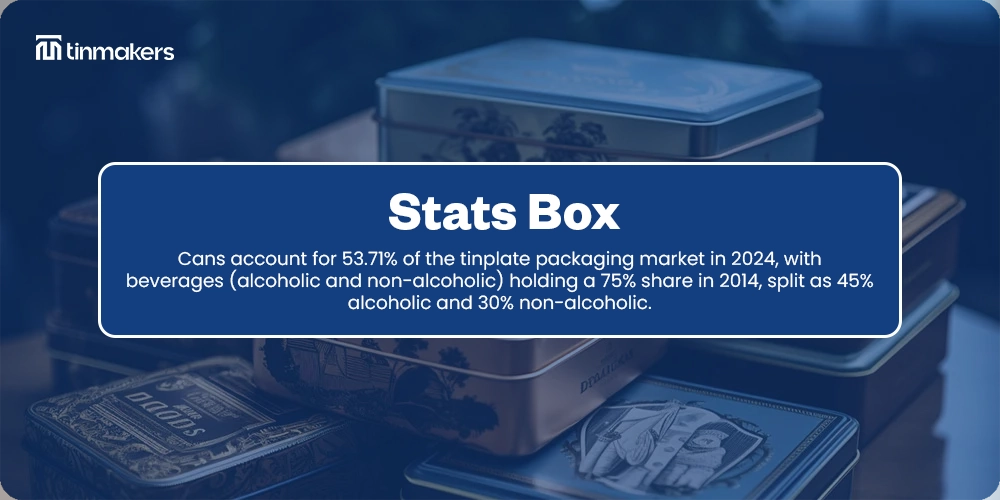
(Source: Towards Packaging, PMC)
2) Metal tins keep food safe far longer than plastic
Once a filled can is sealed and heated, three things happen:
Every living microbe dies
Oxygen inside drops to near zero
The lid’s double seam forms a gasket tighter than most jar caps
Steel is opaque, so ultraviolet light that breaks riboflavin and beta-carotene never reaches the food. Tin also grabs the tiny oxygen traces left after filling.
For brands selling nuts, infant formula powder, or gourmet oils, items where rancidity means refunds. This extra year of life slashes write-offs and broadens export windows.
It's great for retailers to have less spoilage, and for consumers to know that flavor and nutrients remain stable without additives or preservatives.
3) Tin packaging is already the recycling champion
Walk through any modern recycling plant, and you will see a fast-spinning drum magnet pulling tin cans straight from the conveyor. That snap-quick separation is why Europe reports an 84% tinplate recycling rate, with Germany pushing 90 %.
Every tonne of scrap steel redirected into an electric arc furnace spares roughly 1.5 t of carbon dioxide. It is the same climate benefit as taking a small car off the road for eight months. (Source: Recycling Magazine)
Better yet, steel is “infinitely recyclable.” Melting resets its crystal structure so a steel atom can be reborn as rebar, then as a bike frame, and eventually as a cookie tin without losing strength.
Many brands now stamp the Metal Recycles Forever symbol on lids. Surveys show this simple cue lifts a shopper’s perception of eco-value more than plant-based plastic claims.
4) Printing straight on the metal turns the pack into a mini-billboard
Thanks to UV-inkjet heads that fire microscopic drops onto curved steel, printers can now place photo-level graphics directly on formed tins. It means no paper labels are needed.
Once cured under ultraviolet lamps, the ink fuses with the lacquer, shrugging off ice buckets, oily fingers, and dish soap. Direct print also keeps the pack mono-material, so recycling stays simple.
Here are some common printing types used for metal tin packaging.
Printing Technique | Description | Common Uses |
Offset Printing | Uses plates and dampening techniques to transfer ink onto the surface. | Decorative tin designs, branding. |
Screen Printing | Involves pushing ink through a mesh screen onto the surface. | Logo printing, packaging labels. |
Lithography (Gravure) | Uses engraved cylinders for high-quality, detailed images. | Premium packaging, limited editions. |
Digital Printing | Direct printing from digital files onto the surface. | Custom tins, small batches. |
Pad Printing | Transfers ink via a silicone pad onto irregular surfaces. | Decorative elements, logos. |
Hot Stamping / Foil Printing | Applies metallic or pigmented foil using heat and pressure. | Premium packaging, branding. |
Design teams gain the freedom to run variable artwork, holiday editions, QR codes to video recipes, or sequential numbering for collectibles without buying new plates.
For shorter runs under 5,000 units, shrink sleeves are now more expensive than shrink sleeves, especially when you drop label-application labor.
If your product chills in ice (think cocktail syrups) or sweats on export voyages, skipping paper prevents peeling and mold growth that ruins shelf appeal.
5) Triple protection: light, oxygen, and moisture
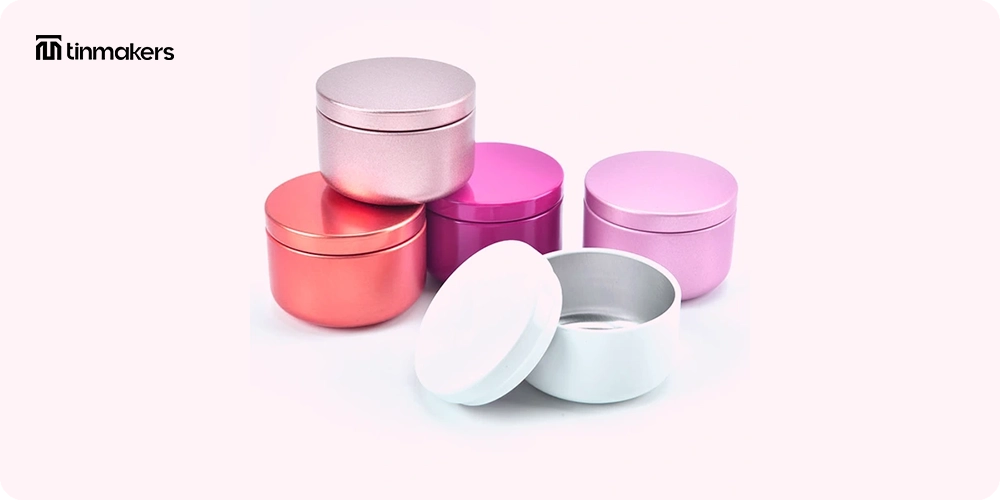
Barrier performance is where tinplate truly shines. Steel walls stop light completely. They also register a water-vapor transmission rate so low that laboratory instruments list it as “below detectable limit,” effectively zero at room temperature.
Tin finishes the job by acting as a mild oxygen absorber. Whenever a trace molecule sneaks inside, it reacts with the metal surface, forming harmless tin oxide instead of turning oil rancid.
Pharmaceutical firms use tins for effervescent tablets because residual moisture would trigger premature fizz elsewhere. Coffee roasters vacuum-seal ground beans in tins to freeze aroma compounds until the pull-ring pops.
6) Child-resistant closures built into tins boost safety
Governments worldwide now demand child-resistant (CR) packaging for cannabis edibles, nicotine pouches, and some cleaning tablets.
Historically, that meant a plastic shell outside the metal. New lid tooling changes that picture. Press shops emboss push-and-slide buttons or two-step turn keys directly into the steel, meeting ISO 8317 and U.S. 16 CFR §1700.15 tests without adding a gram of plastic.
In practice, machinery runs at normal speeds; only the punch profile changes. Because the closure remains metal, the can still sails through magnetic sorting at the end of life. Brands gain a premium look (think matte black balm tin with a hidden spring latch) while retailers accept the pack without extra compliance paperwork.
Adding CR also widens market access. Major U.S. pharmacy chains now list only topical CBD in CR tin metal packaging, and several EU states plan similar rules.
By engineering the safety feature into the metal, you keep the product single-stream recyclable and dodge the multi-material headache that plagues many “jar-in-box” solutions.
7) Smart tins add digital traceability and brand stories
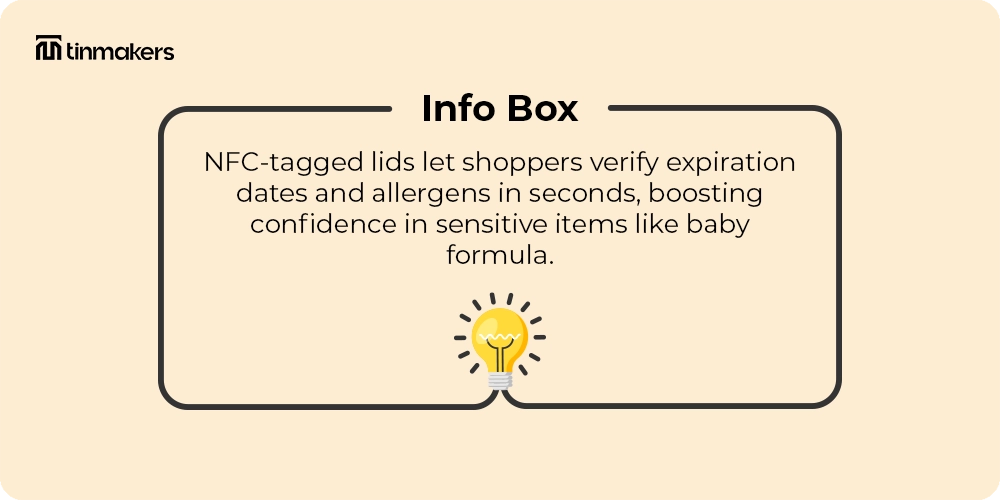
Near-field communication (NFC) tags, thinner than paper, now slide under a tin’s varnish. A quick smartphone tap pulls up origin videos, brewing tips, or a loyalty stamp card.
Markets and Markets predicts the global NFC market will be at roughly $30 billion in 2029, climbing at 7% each year.
Adding NFC costs pennies at volume and uses no battery; the phone powers the chip momentarily. Because the inlay is aluminum and plastic, not steel, recyclers’ magnets still lift the tin cleanly, and eddy-current separators catch the tag later. If data security worries you, use encryption so each scan generates a one-time token.
A Case Study About NFC Tags Implementation in Tin Cans
Austrian packaging specialist Pirlo implemented Smartrac's (now Avery Dennison) on-metal NFC tags on tin cans, enabling digital interaction. This allows consumers to tap cans with NFC-enabled smartphones to access product information, personalized content, or reorder. The solution overcame the challenges of using NFC on metal by employing a thin, flexible ferrite layer. (Source: Avery Dennison)
8) Picking the right thickness saves money and carbon
Choosing the right tinplate thickness is a crucial decision that directly impacts the performance and overall success of your project. It’s usually measured in gauges. The relationship between gauge number and thickness is inverse: Consider thin when the gauge is high and thick when it's low.
Every 0.01 mm trimmed from a tin wall shaves about 4% of the metal weight. Switching a 500 ml paint can from 0.25 mm down to 0.23 mm cuts mass 8% - a saving of nearly eight tonnes over a one-million-unit run.
Finally, weight cuts bring logistics wins: more units per pallet and lower freight costs. Retailers appreciate the easier lifting too, reducing workplace injury claims. When you tally raw steel savings, shipping fuel cuts, and carbon credits, the economics of a slimmed-down tin often beat any plastic alternative while keeping full recyclability.
Conclusion
Tinplate has guarded soups, sweets, and salves for two centuries for one core reason: it works.
Today, the material is anything but old-fashioned.
Advanced lacquers quell acid attack
UV printers splash photo art straight on metal
NFC tags open digital stories
High-strength grades let us use less steel than ever
Alongside those upgrades, metal tin packaging’s original strengths remain: near-zero gas and moisture ingress, stone-solid drop resistance, and a recycling loop simple enough for a classroom magnet demo.
If you build products that must travel far, store long, or wow gift buyers, the insights above give you a blueprint. Know your plating weight and temper to avoid up-charging. Use the can’s unbeatable barrier to slash preservatives.
Armed with these facts (and the research cited), you can stand in any packaging meeting and explain why the humble tin box still earns its shelf space in 2025 and beyond. Contact Tin Makers now for an efficient tin packaging solution to give your business a supreme edge.
FAQs
Can tins rust if scratched?
Yes. If the lacquer or tin layer is scraped and moisture stays, the steel underneath can corrode. Keep dented tins dry and rotate them out first. This is why it’s important to inspect tins regularly and ensure proper handling to prevent scratches and dents.
Are tins microwave-safe?
No. Using metal in a microwave can lead to arcing, sparking, and potentially damage the appliance or pose a fire hazard. Always transfer food to a microwave-safe dish before heating.
How many times can tinplate be recycled?
Indefinitely. Re-melting resets the metal’s structure, so strength and purity stay the same in each loop. This metal can be melted down and recycled to produce new products without losing its intrinsic value or characteristics.
Does metal tin packaging affect food taste?
Tin packaging doesn’t affect food taste. It is chemically stable and doesn’t react with acidic or alkaline foods. It prevents it from altering the food’s flavor. Modern BPA-ni epoxy or polyester linings act as neutral barriers. Off-flavor occurs only if the coating is damaged.

Liam George Freeman
Liam George Freeman is a seasoned expert in the packaging industry, with a focus on delivering sharp, in-depth contributions that resonate with readers. His deep understanding of tin packaging and its expansion, the diverse types, and global impact, including its role in NASDAQ markets, makes him a true gem of a writer. Liam brings clarity and authenticity to every piece. When he’s not crafting compelling insights for the writer's desk, he will likely be found strategizing over a chessboard, always up for a thoughtful match.





Copyright © 2026 tinmakers. All rights reserved