



Tin Packaging vs. Plastic: Why Tin Is Winning in 2025?
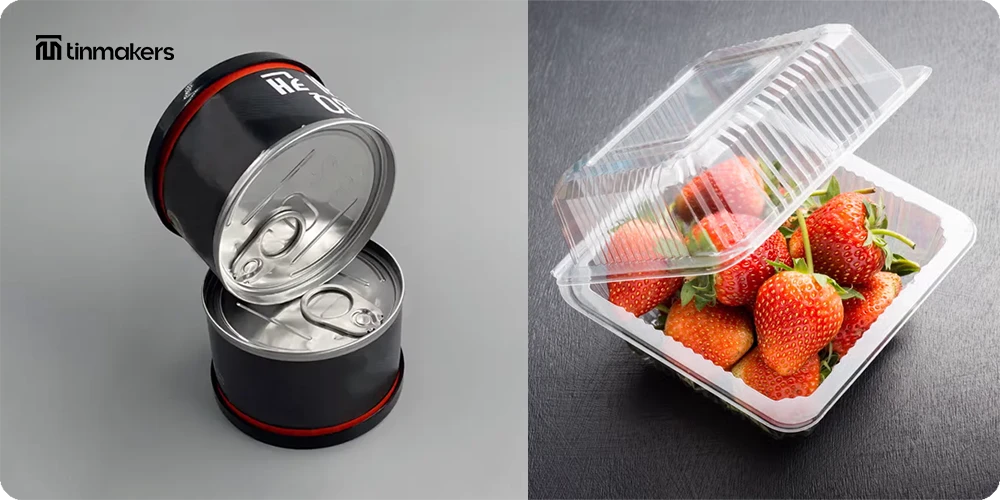
Shoppers in 2025 spend more time studying the package than the product. They check carbon labels, look for “BPA‑free,” and ask whether the box will end up floating in a river or buried in a landfill.
Brand managers and business owners feel the heat from every side:
Parents who fear chemicals
Teens who post beach‑clean‑up videos
Lawmakers who tax waste
That pressure leads to one big debate: Tin Packaging vs. Plastic.
Is a metal can worth the extra ounces?
Does plastic still rule in a world chasing sustainability goals?
This article breaks the jigsaw into plain parts.
We have written this article to help you learn how each material is made, how it behaves on a truck, how it scores on climate charts, and how it shapes customer trust. Real-case stories and easy math replace jargon, so it becomes easy for you to understand this topic in detail.
By the end, you’ll see why more companies in 2025 stack shipments with tin, not plastic. Therefore keep reading until last to get the most useful information about Tin versus plastics.
What Buyers Worry About Packaging in 2025?
The packaging choices of buyers are changing in 2025 as they become more concerned about sustainability and health. As social media takes over, consumers are increasingly highlighting packaging's environmental impact.
Family, policymakers, and environmental advocates are pushing brands to adopt easily recyclable and non-toxic packaging materials. This is why metal tin packaging is emerging as a preferred choice over plastics for addressing these concerns.
Here are things that buyers are worried about in 2025.
Litter and Ocean Waste
Social media feeds overflow with images of plastic drifting through rivers. Visible pollution like the Great Pacific Garbage Patch fuels their anxiety about the impact of hazardous packaging on marine ecosystems.
This is the reason families now feel personal guilt and start demanding eco-friendly packaging solutions from brands. It is now mandatory for shoppers to check municipal lists before purchasing a package claiming to be 100% recyclable in order to ensure curbside pickup accepts it.
Chemical Safety
Some reports about additives leaching from certain plastics raise concern for baby food, sauces, and even shampoos. Tinplate cans use inert polymer linings that block both rust and flavor transfer, easing those fears.
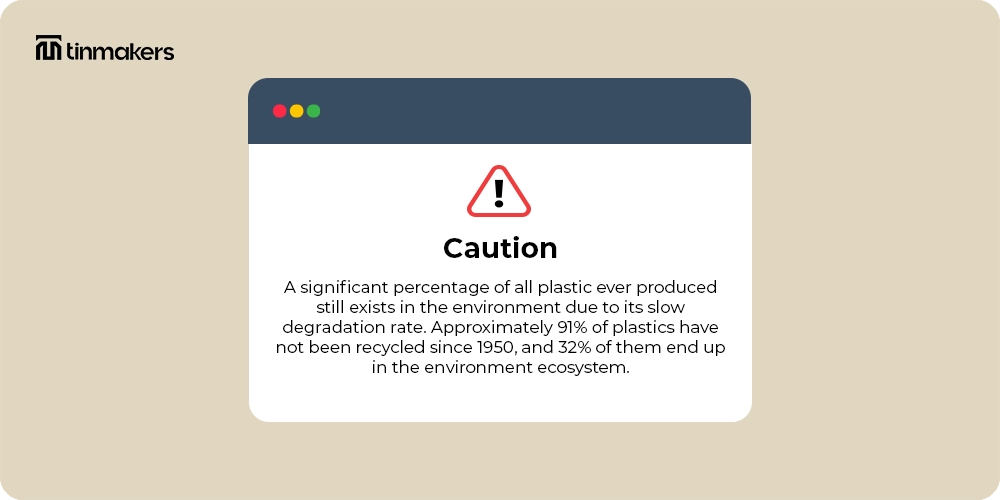
An article published on ScienceDirect reveals that 79 plastic baby food pouches emitted various harmful chemicals, including four bisphenols and numerous phthalic acid diesters, with bisphenol A being the most common.
Carbon Footprint Visibility
Buyers in 2025 are very conscious and demand carbon footprint visibility on packaging due to environmental concerns. They now demand a packaging solution that contributes to a lower carbon footprint.
Now:
“Carbon per serving” labels sit next to calorie counts.
A lower number can help turn around a sale.
Plastic packaging production relies heavily on fossil fuels, which is a significant contributor to global greenhouse emissions. On the other hand, steel recycles over and over without losing strength. Its net footprint keeps shrinking with each trip through the loop.
Authentic Recycling
The term “recyclable” lost shine when people learned only a few plastics actually get reprocessed. In the face of increasing "greenwashing", in which products are falsely marketed as sustainable, the demand for recycled materials has risen. Steel’s magnetic property gives it a head start, any material‑recovery facility can pull cans with a simple magnet.
Why Tin Packaging is Winning Over Plastic Packaging in 2025?
Answering the question, "Why is tin packaging winning over plastic packaging in 2025?" is simple.
Tinplate packaging is made of recyclable tinplate that is durable, ecologically friendly, and safe to store food in. Many plastics are non-biodegradable, polluting, and leaching harmful chemicals.
There are new expectations from consumers regarding recyclability standards, packaging waste regulations, and limits on single-use plastics. In this scenario, tin packaging is winning the game when it comes to its comparison with plastics.
Eco-conscious consumers are actively looking for easily biodegradable packaging solutions and are willing to pay more for them. The eco-friendly nature, advancements in design and functionality are making tin packaging a favorable choice for brands and buyers.
Tinplate packaging market size was estimated at USD 1.67 billion in 2024. Over the forecast period, the market is expected to grow from USD 1.76 billion in 2025 to USD 2.65 billion by 2032 at a compound annual growth rate of 6.00%. (Source: Fortune Business Insights)
Here are some of the great reasons why tin packaging has become a favorable choice.
Safety and Freshness
Tinplate walls block 100% of light, oxygen, and water vapor, giving food and drink a longer shelf life.
Here’s an example:
A Houston salsa maker filled two lines (PET jars and steel cans) and stored them at 86 °F. After 24 weeks, the glass‑clear plastic lost 18% of its bright red color; the salsa in steel lost just 3%.
Similar stories repeat for coffee aroma retention, pet‑food palatability, and paint viscosity.
Plastics can reach comparable barrier numbers, but only by laminating extra films or spraying coatings. These additions complicate sealing, raise costs, and make later recycling extremely difficult.
Strength, Shipping, and Storage
Tin’s inherent rigidity provides superior structural integrity and protects the items from crushing and damage during transport. Steel tins are particularly favored for their protection, convenience and recyclability. On the other hand, plastics are more vulnerable to damage and do not decompose.
A 0.23 mm tinplate body brushes off a waist‑high drop with a cosmetic dent. A plastic jar of the same diameter will often crack, leak, or at least warp its thread. Steel resists corner crush when pallets are stacked two or three high in automated warehouses.
Here are the savings beyond the factory.
Less void fill: Sturdy walls need fewer air pillows.
Fewer returns: Broken seals create refunds and bad reviews.
Better cube: Cylindrical or rectangular can nest edge to edge, trimming freight costs.
Environmental Scorecard
When it comes to both luxury and sustainability, nothing can beat tin packaging solutions. When we say that tin is “sustainable,” we mean that it can be easily processed and returned to the production cycle without production loss.
However, its counterpart, plastic, is dangerous for the environment due to its persistence in the environment, the toxic chemicals it releases during decomposition, and the greenhouse emissions associated with its production.
Tin Vs Plastics Recycling Reality
U.S. steel‑can recycling: Roughly 71% (Almost 1.1 million tons)
Overall plastic packaging recycling: Less than 10%.
Because every steel mill buys scrap, cans hold real market value. Most plastic formats fetch near zero or even negative value, so many end up incinerated or buried.
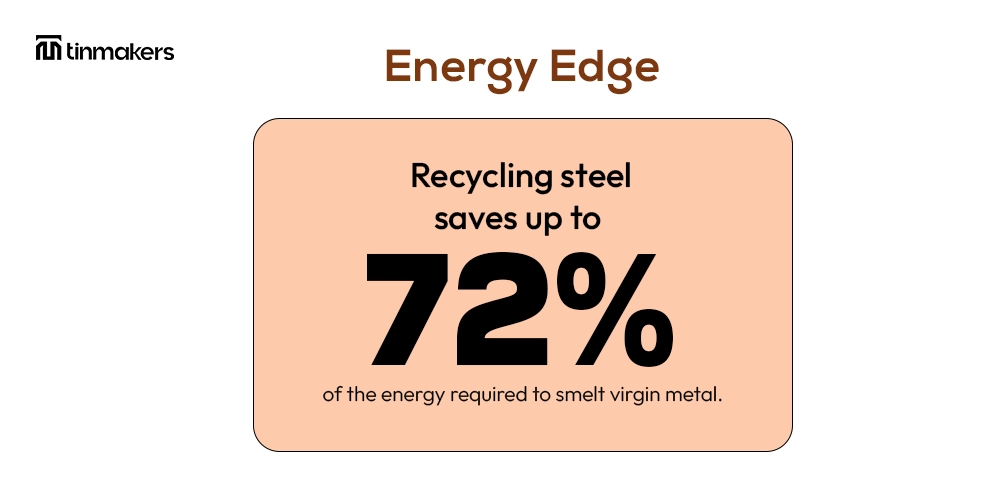
(Source: Euric Metal Recycling Factsheet)
Landfill Behavior
Steel never releases microplastics. If a can somehow evade recycling, it rusts down to iron oxide, essentially dirt. Abandoned plastic can linger for centuries and break into micro‑fragments that move up the food chain.
Cost Analysis in Tin Vs. Plastic Packaging
In terms of costs, plastic packaging is generally considered low-priced as compared to tin packaging due to its inexpensive production and lightweight nature. Tin can boxes can have slightly higher costs but can be more cost-effective in the long run due to their durability and ability to preserve products.
Here’s the cost line table between tin and plastic packaging.
Cost Line | Tin Package | Plastic Package |
Raw material | Higher per pound | Lower per pound |
Fill‑line speed | Very fast (rigid) | Mixed |
Transit damage | Rare | Moderate |
Scrap credit | Positive | Near zero |
Waste‑law fees | Lower | Higher |
Now, I would like you to consider the following points:
A three‑year total‑cost model that includes spoilage, returns, extended‑producer‑responsibility fees, and scrap revenue often shows tin matching or beating plastic on cost per filled unit.
How can we make tin packaging more affordable?
By light‑gauging from 0.23 mm to 0.18 mm and fine‑tuning seam heights, brands shed about 20% of metal weight without hurting performance.
Branding and Shelf Appeal
It is obvious that tin packaging has a higher shelf appeal compared to plastics. Nothing can beat these boxes in terms of light, air, and moisture resistance. However, plastic packaging can be more susceptible to punctures or tearing that ultimately impact the shelf appeal.
The cool feel of metal and the “click” of an easy‑open lid whisper quality. Gift buyers rate tin containers 20% more premium than identical designs on plastic packaging.
Print and Shape Freedom
Offset lithography lays photo‑grade art directly on metal. Manufacturers then emboss logos, add matte‑and‑gloss contrasts, or punch window cut‑outs backed with film. Whether it is tapered, tall, or slim, the body of the package becomes a silent billboard.
When Plastic Still Makes Sense for Packaging?
Even in 2025, plastic keeps clear advantages for:
Squeeze bottles – Users need flexible walls for ketchup, honey, or lotion.
Transparent produce boxes – Shoppers judge lettuce and berries by sight.
Ultralight aid sachets – Disaster zones demand feather‑weight packaging.
High‑pressure carbonated drinks – Certain plastics handle pressure while staying see-through.
Integrated pumps or spray triggers – Complex fitments still rely on polymer parts.
Hybrid concepts, thin refill pouches sold inside strong reusable tins, combine the best of both worlds.
From Plastics to Tin Cans - A Shift in Action (Case Study)
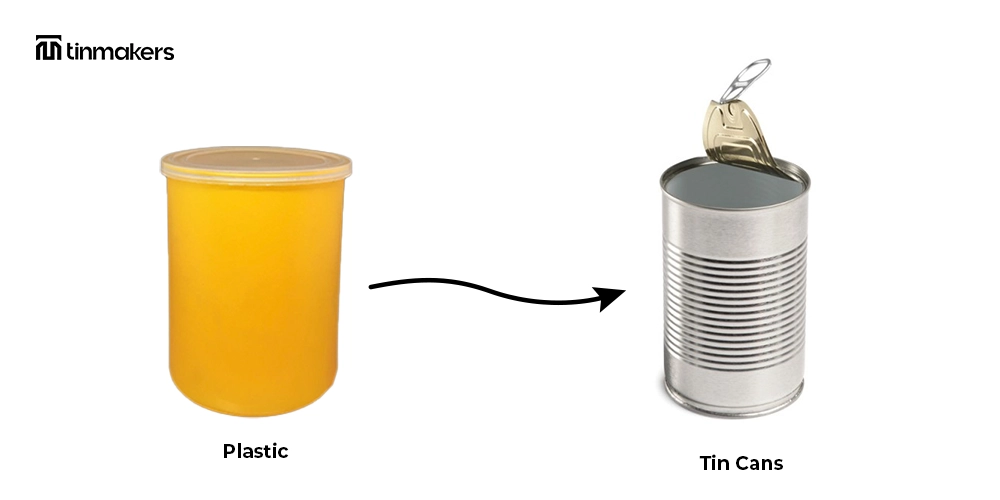
As an example, In 2022, San Pellegrino switched to tin cans in their packaging to comply with consumer demands for eco-friendly packaging. As a result of these shifts, eco-conscious shoppers not only save resources but also build brand loyalty.
Several brands, including PepsiCo Aquafina, Coca-Cola Dasani, and Gnarly (a nutritional brand), have switched to tin cans. These changes are largely driven by environmental concerns and the benefits of recycling tin cans, which are less carbon-intensive than plastic bottles.
Looking Ahead
Rules on packaging waste tighten every year.
States like California and nations across the EU now tax or ban formats that lack real recycling paths. Retailers add penalties for brands that drive up store trash bills.
Against that backdrop, tinplate’s infinite recyclability and ready demand from steel mills provide a future‑proof choice. Equipment suppliers keep trimming wall thickness; dropping can weight by single‑digit percentages each year while holding strength.
Meanwhile, next‑gen organic coatings remove any lingering doubts about food‑contact safety. For many product classes, the switch to steel is no longer a trend; it is the new baseline.
Source: ScienceDirect
Final Thoughts
The Tin Packaging vs. Plastic debate blends science, money, and emotion.
Here’s the summary:
Steel cans cost a bit more at checkout, but save money in transit, cut spoilage, and sail through recycling plants.
Plastic remains handy for squeezable or crystal‑clear needs, yet it struggles with low capture rates and growing landfill fees.
When brands add hidden costs, returns, waste taxes, and climate targets, tinplate often comes out ahead. Most importantly, buyers trust a material they can drop in any curbside bin, knowing it will re‑enter the loop.
Pick the package that answers customer worries, not just today’s raw‑material bill, and your product stays future‑ready. Turn to Tin Makers now if you’re in search of sustainable yet affordable tin packaging solutions for your business.
There is a wide range of packaging available from our company, ranging from candle tins to cosmetic tins. Just let us know what you need, and we'll take care of it.
FAQs
Can a tin can rust on my shelf?
Only if both the tin coating and inner polymer lining are pierced, under normal kitchen use, rust is rare. Store cans in a cool, dry spot, avoid deep dents, and you will see no corrosion even after several years.
Do I need to rinse cans before recycling?
A quick spoon scrape is enough. Any sauce left inside burns away in the steel furnace, so the metal flows clean. Heavy rinsing wastes water and offers little extra recycling benefit.
Is tin heavier to ship than plastic?
Empty tins weigh more but filled can cube more tightly on a pallet. There is generally no significant difference in fuel consumption per edible ounce when void space and damage returns are counted.
Does printed paint interfere with recycling?
No. During remelting, the paint layer vaporizes at high temperatures. The remaining iron and tin become new sheet steel, beams, or car parts without quality loss.
How do steel price swings compare with plastic?
Both materials track global markets. Multi‑year contracts stabilize budgets, and the scrap credit from collected cans cushions brand costs when steel prices dip. It is something plastic cannot offer.

Liam George Freeman
Liam George Freeman is a seasoned expert in the packaging industry, with a focus on delivering sharp, in-depth contributions that resonate with readers. His deep understanding of tin packaging and its expansion, the diverse types, and global impact, including its role in NASDAQ markets, makes him a true gem of a writer. Liam brings clarity and authenticity to every piece. When he’s not crafting compelling insights for the writer's desk, he will likely be found strategizing over a chessboard, always up for a thoughtful match.





Copyright © 2026 tinmakers. All rights reserved