



From Design to Delivery: The Journey of Custom Metal Tins
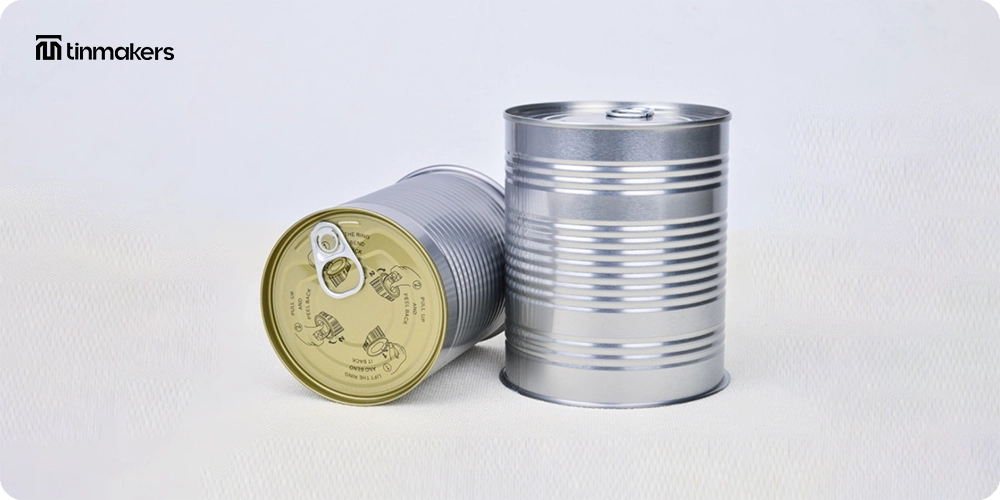
Packaging has become a critical element in today’s business environment, far more than just an ordinary container. It builds consumer perception, a solid first impression, and maintains an engaging brand image.
When it comes to customers, they love packages they can reuse for many time. For example, a bright tin that keeps cookies fresh today can hold sewing pins next year. Brands know this, which is why the demand for custom metal tin packaging is growing.
From a creative concept to a finished product, the journey of metal tin manufacturing involves several crucial stages. Throughout the article, every step along the way has been shown (from the conception of the idea to the pallet rolling into your warehouse), so marketing, sourcing, and logistics are all in sync.
Let’s read now.
Why Metal Tin Wins Hearts, Wallets, and Landfills?
We are living in an era where material choices are examined for their influence on customer appeal, environmental impact, and cost-effectiveness. In this scenario, there is a material that offers various advantages, and that is metal tin.
As a business owner, have you ever thought about what makes tin packaging such a perennial favorite and a powerful choice against other alternatives?
Here’s the reason.
Metal packaging does three main things:
Guard goods
Boost shelf appeal
Protect the planet
Steel walls block light and air better than most other packs, stopping rancid oil and stale crumbs. Color-rich lithography floods every inch, so the package itself becomes a small billboard.
Best of all?
Steel and aluminum recycling will last forever. EPA data lists a 73.8 percent recycling rate for steel packaging in 2018 (Approximately 1,600,000 Tons). When a pack earns a second life on a shelf, brand exposure doubles. Buyers keep branded tin boxes because they look good and feel sturdy, which quietly stretches your marketing budget.
Grand View Research reports the metal packaging market hit $148.1 billion in 2024 and is growing 3.7 percent each year thanks to rising demand for greener packs (Source: Metal Packaging Market Size & Share | Industry Report, 2030).
How Are Custom Metal Tins Created, From Concept to Completion?
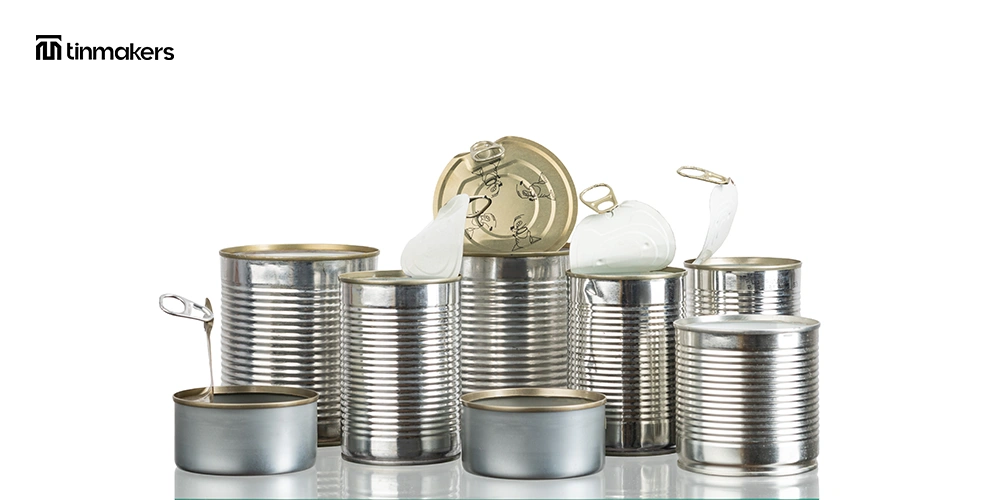 Custom metal tins have become a favorite among various business owners due to their durability, premium feel, and highly personalizable canvas for design.
This section pulls back the curtain to reveal the detailed process behind the custom metal tins’ manufacturing. Here, we are going to walk you through each step by explaining each phase in detail until the final metal tin package is ready.
Step 1: Turn The Problem Into A Pencil Sketch
Every good pack starts with pain. Fragile biscuits shatter in shipping or candle wax sweats on hot trucks. Write that pain in one clear sentence.
Next, sketch shapes on paper. Round, square, oblong, and hinge-lid? Determine which shape is highly suitable for your product.
Simplicity is fine; suppliers translate rough notes into tech drawings. Early talk with tin packaging manufacturers like Tin Makers saves time because they point out tricky corners or tight seams before costs escalate.
Print designers should note emboss (raised), deboss (pressed in), and spot UV (extra shine). Using accurate terms speeds up approval and shows you are respectful of factory time.
Step 2: Digital Proofs and 3-D Checks
The next phase is checking digital proofs of your desired tin box.
Packaging designers load the sketch into a CAD or AI file to build a virtual shell. Three things get tested right away: seam allowance, wall stretch, and fill volume. Many packaging manufacturing companies offer resin or cardboard mockups that arrive in a week. Change anything that feels off now; altering hard steel later hurts the timeline.
Many tin packaging suppliers send STL files so your team can spin the model for free viewers. If sales staff need visuals for pitches, grab screenshots right from that file.
Step 3: Picking Metal, Coating, and Finish
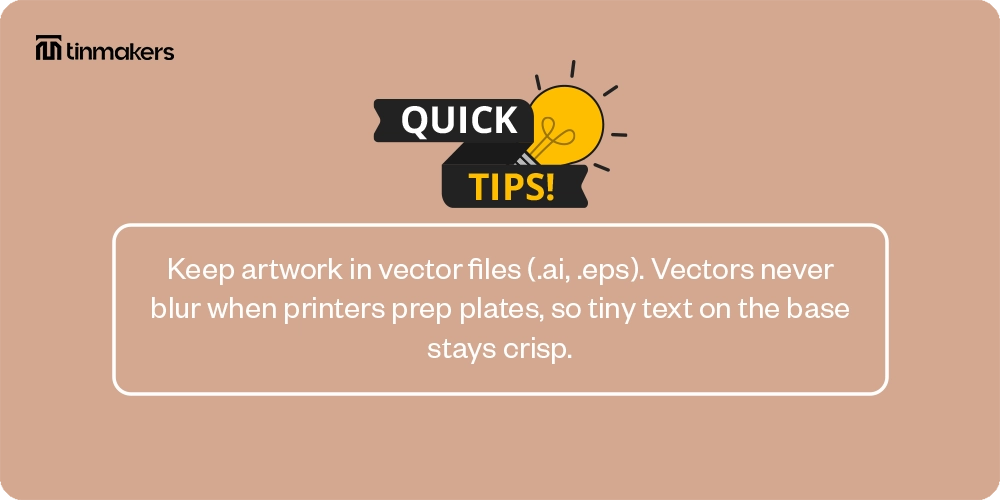
This is a crucial phase in the overall custom metal tin manufacturing process. Your products’ appearance and functionality depend upon choosing the right metal. Tinplate thickness sets strength.
Here are some options.
0.18 mm for breath mints or small candy.
0.23 mm for tea, cookies, and gift sets.
0.28 mm for tool kits or promo tumblers.
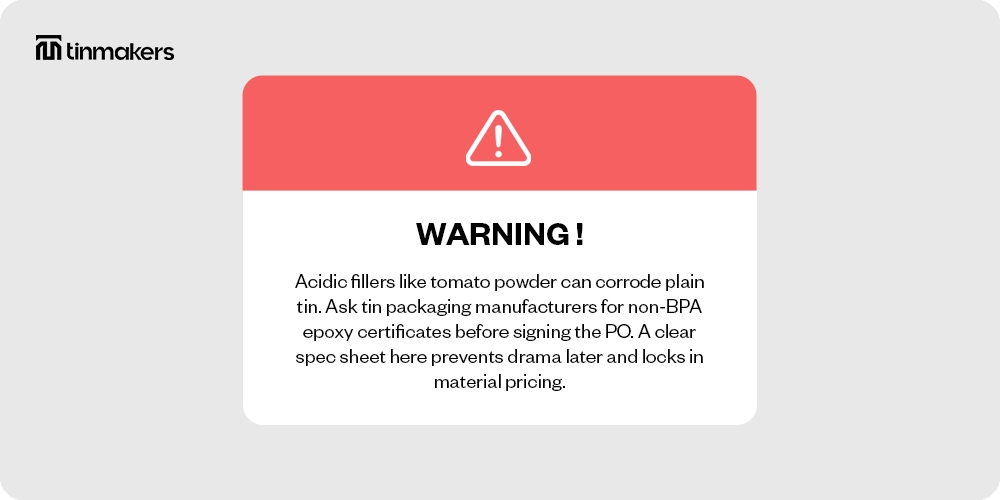
Inside, food-safe epoxy or gold lacquer guards flavors. Outside, you can choose gloss, matte, or soft-touch varnish. Each finish changes color depth, light bounce, and grip feel.
Step 4: Tooling: Where Metal Meets Math
Stamping dies are giant steel blocks that carve sheet metal into shape. Their cost depends on the shape detail, emboss depth, and yearly units. Plan 15 - 25 days for die build.
During that window, engineers share photos of EDM sparks shaping cavities. Once dies pass hardness tests, they move to the press hall.
A strong vendor network provides backup dies. If one cracks, the line shifts to a spare, saving your schedule. Multi-plant metal packaging solutions provide this kind of redundancy to global brands, thus reducing risk.
Step 5: Metal Printing and Pressing
In this step, litho presses lay CMYK ink on flat metal sheets. After a 400 °F cure, sheets slide into presses that blank, draw, trim, and curl. A modern dual-lane can stamp 100 units a minute. A register mark ensures that side art matches the seam. Your pre-press team must add 3 millimeters of bleed so that no white line appears.
Small batch runs under 5,000 pieces often share press time with other orders, so book slots early. You need a forecast to keep the plant balanced. Holiday jobs can swallow a line for weeks; your forecast keeps the plant balanced.
Step 6: Quality Checks That Matter
The importance of quality inspection during custom tin manufacturing becomes obvious when considering the cost savings they provide. Bad-quality packaging can result in expensive product recalls, damage to customer experience, and replacements.
Hourly checks are a good practice for strong plants. The experts use feeler gauges to measure lid fit, rub inks 25 times with cloth, drop samples from belt height, and run salt-spray tests on cosmetics. Color fade, rust risk, and dent control are all covered in these checks.
If a tin fails, the line stops until the root cause is fixed. Fast feedback loops limit scrap and protect your cost.
Stats Box
The “50 States of Recycling” study says steel packaging retains over 95 percent of its material value after one recycle loop, beating glass and most plastics (Source: [PDF] A State-by-State Assessment of US Packaging Recycling Rates).
Step 7: Packing for the Long Haul
When the custom metal tins are manufactured, they are packed in bubble sleeves or cardboard cells, then double-wall cartons rated 275 lbs burst strength. The cartons are stacked on heat-treated pallets wrapped tight with film and corner boards.
Tracking through technology helps, too. Many shipping companies add GPS tags with strikes and temperature spikes that are sent to a cloud dashboard. A fast alert means you can hold a shipment if it takes a hard hit.

Final Thoughts
The journey of custom metal tins is summarized in the following steps: design, CAD, dies, print, press, test, ship. When each step takes place on time, custom metal tins arrive before even launch day, look flawless on the shelf, and support serious sustainability claims. A clear brief and fast approvals keep the chain tight.
Are you trying to find a reliable tin packaging manufacturer to design and produce personalized metal tins for your business?
Tin Makers is here for your help.
Please let us know your needs and packaging requirements. Choosing us will ensure that your next batch of branded tin boxes is delivered on time and under budget-ready to win hearts, cupboards, and recycling bins worldwide.

Liam George Freeman
Liam George Freeman is a seasoned expert in the packaging industry, with a focus on delivering sharp, in-depth contributions that resonate with readers. His deep understanding of tin packaging and its expansion, the diverse types, and global impact, including its role in NASDAQ markets, makes him a true gem of a writer. Liam brings clarity and authenticity to every piece. When he’s not crafting compelling insights for the writer's desk, he will likely be found strategizing over a chessboard, always up for a thoughtful match.





Copyright © 2026 tinmakers. All rights reserved