



Advantages of Using Tin Box Packaging for Cookies
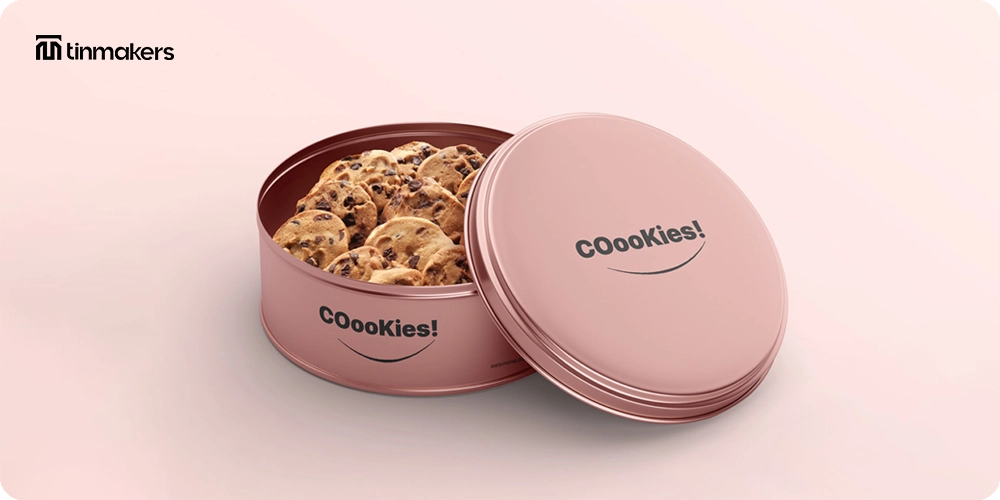
Picture opening a pack of chocolate chip cookies after school and hearing that perfect crunch.
Now, picture the same pack left open overnight, soggy, limp, and sad.
Packaging is the silent hero that makes the first scene possible.
For cookies, tin boxes have become a favorite with home bakers, gourmet brands, and mass producers alike.
Why?
Steel-based tinplate seals tight, shields against oxygen, and shrugs off bumps that would crush flimsy pouches. On top of that, a shiny, decorated tin feels like a small gift. It’s one consumers often keep long after the last crumb is gone.
This article walks through each advantage in detail, backed by food science studies and real-world numbers. By the end, you’ll know exactly why a simple metal box can mean fresher taste, fewer returns, and happier customers.
Why Packaging Choice Matters for Cookies?
Fresh cookies start to lose quality the moment they leave the oven. The two biggest enemies are moisture migration and oxidation.
Moisture turns crisp bites chewy; oxygen stales fat and dulls flavor. Sugar cookies stored in paperboard cartons lose their crunch significantly. By contrast, a metal container with a food-grade gasket kept water activity stable for three weeks.
Moisture and Oxygen: A Quick Breakdown
Moisture sorption: Cookies are low-water baked goods. They pull humidity from the air, losing snap.
Lipid oxidation: Butter and oils react with oxygen, making rancid off-notes.
Volatile loss: Aromatic compounds escape through porous films, weakening smell and taste.
Cookies stay fresh and flavorful longer when they are stored in tin containers. They prevent cookies from losing their crispness or developing stale flavors because of their airtight design. Besides being functional, tin boxes are usually elegant, adding a touch of sophistication to a room, becoming a keepsake long after the cookies are gone. Because they combine practicality and charm, they are one of the best choices for cookie packaging.
Key Benefits of Tin Boxes for Cookie Freshness
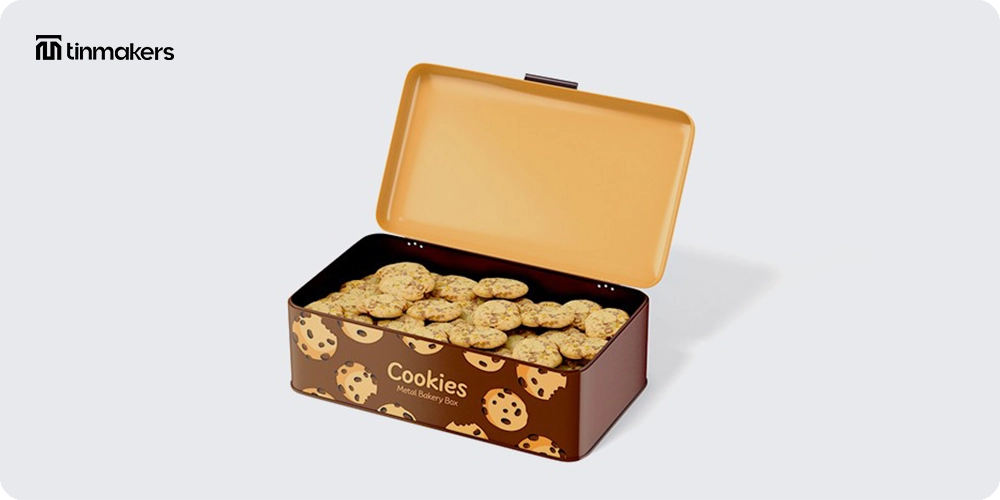
The tin box packaging is more than just a means of storing cookies - it's a symbol of quality, preservation, and innovation. Their capability of keeping food items fresh and secure for the long term makes them an ideal choice for cookie packaging.
Moreover, it’s not something that customers will discard after the cookies are gone. They will keep it and use it for storing other items, ultimately increasing your brand’s awareness.
Here are some of the greatest advantages of cookie tin packaging
Barrier Against Moisture
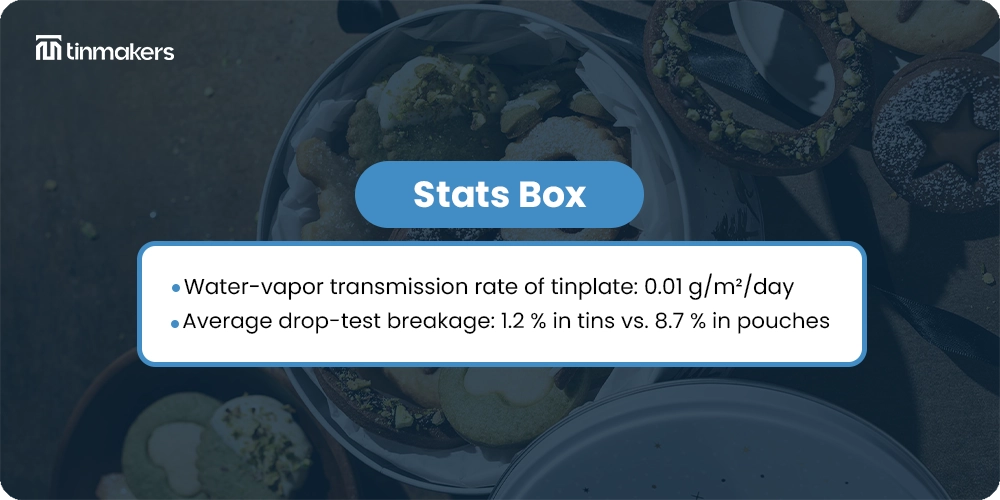
Moisture is enemy number one for crisp cookies. Even a small rise in relative humidity can turn a snappy shortbread soft within hours. Tin boxes fight this problem by offering a near-zero water-vapor transmission rate.
The tinplate walls, sealed seams, and snug lid create a tight chamber that slows the movement of water molecules to a crawl. In practical terms, that means the low water activity inside the cookie stays stable for far longer than it would in a paperboard carton or thin plastic pouch.
Food technologists state that when sugar cookies are stored at relative humidity, those packed in tins keep their original snap for three weeks, while those in paperboard lose crunch after 1 week.
For brands that ship nationwide, the ability to hold texture during long trips through changing climates keeps customers delighted and reduces refund requests. Bakers also gain a buffer against storage hiccups at warehouses where climate control may be spotty.
Oxygen Shield for Fat Stability
Butter and vegetable oils give cookies their rich taste but break down quickly when oxygen slips inside the pack. Oxidation produces small molecules like hexanal that create rancid off-notes and dull buttery aromas.
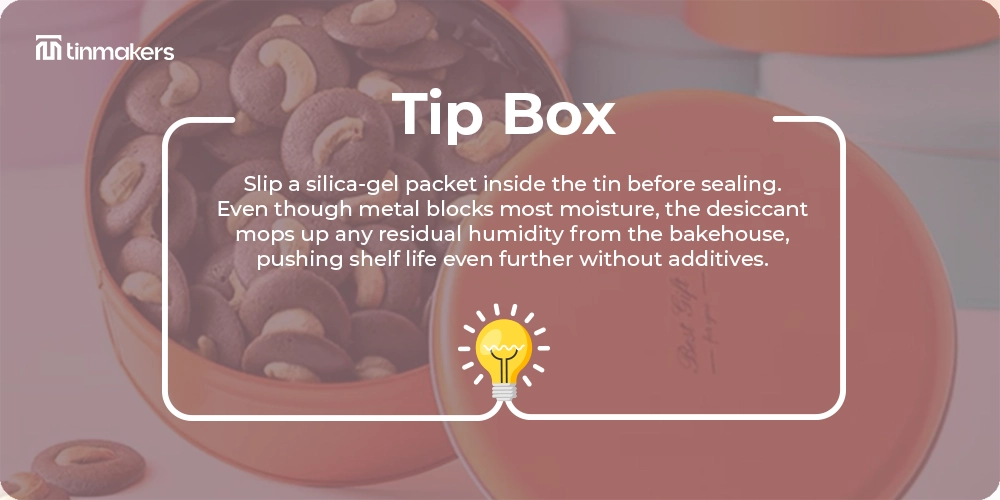
Tin boxes work as an oxygen wall. Their steel core, coated with a thin layer of tin and lined with a food-safe lacquer, shuts out gas far better than flexible films.
Lower oxidation means brighter dairy notes, intact chocolate chips, and no waxy mouthfeel. For specialty cookies loaded with roasted nuts (high in unsaturated fats), this oxygen block is even more important.
Producers can extend shelf life without loading formulas with synthetic antioxidants, which many clean-label shoppers avoid. Retailers benefit too: product rotations last longer, and displays stay fragrant instead of giving off a stale smell that turns buyers away.
Physical Durability During Transport
Cookies may look sturdy, yet their brittle crumb and decorative toppings make them one of the most break-prone snacks in e-commerce. Dropping a poly bag from just thirty inches can shatter a whole row of shortbread soldiers.
Tin boxes add a rigid armor that spreads impact forces across the shell instead of concentrating them on a single cookie.
In independent tests, food scientists packed identical butter cookies in tins and laminated pouches, then subjected both to vibration and drop cycles that mimic courier handling. Breakage in tins averaged 1.2%, while pouches topped 8%.
That seven-point gap means far fewer sad crumbs arriving at a customer’s door and lower write-off costs for the brand. The same rigid wall also protects icing details, sprinkle patterns, and fragile shapes like stars or hearts that often snap under compression.
Tins stack neatly on pallets without crushing the bottom layers, streamlining warehouse space and reducing the need for extra dividers or bubble wrap. These logistical wins translate to lower freight damage claims and happier unboxing videos on social media.
Flavor and Aroma Preservation
Cookie flavor is a complex mix of volatile compounds, many created during Maillard browning in the oven. These tiny molecules are quick to evaporate through porous films, which is why an open bag of cookies loses its enticing smell overnight. Cookie tin packaging seals aromas in, keeping the first whiff as strong on day twenty as on day one.
Locked-in aroma does more than please noses; it primes taste buds, making the eating experience richer and improving perceived freshness. As a result of aroma stability, brands that add subtle flavor notes (like lavender shortbread or espresso biscotti) can preserve these delicate notes during shipping.
When the lid clicks open, and a burst of smell greets the customer, the tin has already done half the selling work.
How To Save Costs With Cookie Tin Containers Across the Supply Chain?
At first glance, metal costs more than a laminated pouch, but zoom out and the numbers often flip in tin’s favor.
Sturdy walls slash breakage claims, which can run 2% to 10% of shipped units for fragile snacks. Lower damage means fewer replacement shipments, smaller customer-service teams, and less food waste.
Tin containers also palletize neatly without corner boards or extra shrink wrap; a standard 40-inch pallet can stack five tiers high with no compression loss, saving warehouse cubic feet and freight dollars.
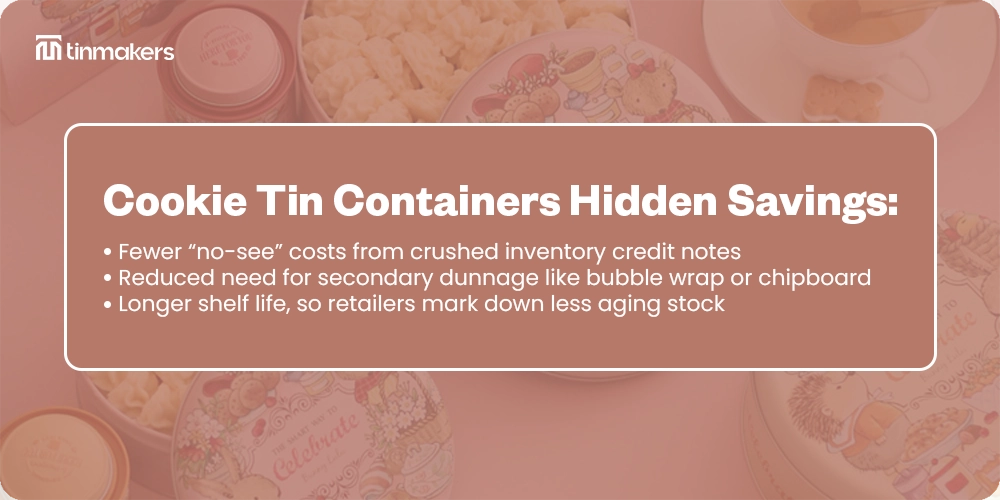
Because consumers tend to keep these cookie tins, brands often recoup some of the packaging expense through higher perceived value and premium shelf pricing.
Marketing budgets stretch further when the empty container lives on as a cookie jar or craft box, extending logo exposure at zero extra spend. When the total cost of ownership is tallied, materials, logistics, returns, and brand lift, tin boxes frequently land in the same ballpark as a flexible film while delivering far more upside.
Tin Boxes: A Source Of Consumer Convenience and Reuse Value
Modern shoppers want packaging that fits busy lives. Tin lids pop off quickly, reseal with a reassuring “click,” and guard against pantry pests. It means no extra clips or plastic tubs are required.
The rigid shape keeps delicate macarons or buttery shortbread intact when tossed in a backpack for school or work. Portion control is simple: lift the lid, grab a couple of cookies, close, and go.
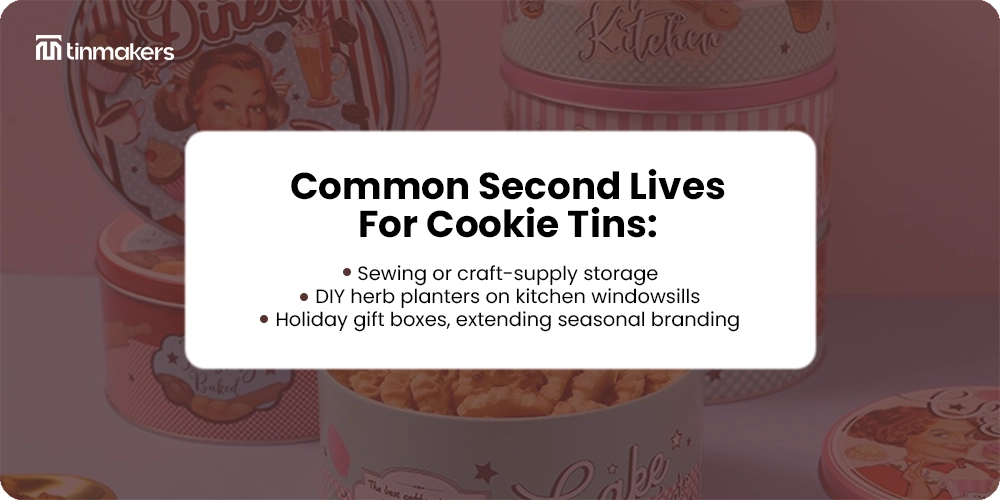
Every reuse moment reminds people of the brand that supplied the handy container, nudging them toward a repeat purchase. User-generated photos of up-cycled tins often circulate on social media, creating free word-of-mouth buzz.
Meanwhile, the durable build answers rising consumer concerns about single-use plastics. It supports your company's sustainability pledges without complicated recycling instructions.
Convenience today and usefulness tomorrow make tin packaging a win-win in the eyes of families looking for both freshness and practical value.
A study on packaging visual appearance noted that optimized packaging, such as cookie tin boxes with customized designs, enhances perceived product quality and stimulates consumer interest (Source: Frontiers).
Conclusion
Fresh cookies make people smile; stale ones ruin the moment. Tin boxes solve the core problems of moisture, oxygen, and rough handling while adding marketing sparkle and green appeal. Studies confirm their top-tier barrier and strength.
Consumers love the premium feel and endless reuses. Manufacturers enjoy fewer breakages, longer shelf life, and smoother logistics. Whether you run an artisan bakery shipping holiday assortments or a global snack line filling millions of tins per month, metal packaging turns everyday biscuits into memorable experiences and repeat sales.
FAQs
Are tin boxes safe for food?
Yes. Food-grade tinplate is lined with an epoxy or BPA-NI lacquer that prevents metal contact and meets FDA standards. Always request certificates of compliance from your supplier.
Won’t metal make cookies taste metallic?
Not with proper lining. Modern interior coatings block any interaction between the steel substrate and the cookie fats, so flavor stays true.
How can I keep production costs down with metal cookie tins?
Order standard shapes in larger runs, choose one print design per size, and fill closer to source to trim freight. Savings on breakage and stale returns often offset the extra material cost.
Do tins really improve shelf life compared with plastic?
Studies show up to four times longer crunch retention thanks to near-zero water-vapor and oxygen transmission. That means fresher taste on the store shelf and in the pantry.

Liam George Freeman
Liam George Freeman is a seasoned expert in the packaging industry, with a focus on delivering sharp, in-depth contributions that resonate with readers. His deep understanding of tin packaging and its expansion, the diverse types, and global impact, including its role in NASDAQ markets, makes him a true gem of a writer. Liam brings clarity and authenticity to every piece. When he’s not crafting compelling insights for the writer's desk, he will likely be found strategizing over a chessboard, always up for a thoughtful match.





Copyright © 2026 tinmakers. All rights reserved